




 Login / Create Account










What Is Overflow Constipation in Kids?
share this article
You've noticed your potty-trained little one is having accidents again — and here's what makes it extra confusing: the stool looks loose. Watery, even. So you're wondering if they've got a stomach bug, or if something's suddenly wrong with their digestion.
But if your kiddo has also seemed backed up lately, or hasn't had a real bowel movement in a while, the answer might be the exact opposite of what you're seeing. Overflow constipation is one of the most misread situations in all of pediatrics — and it trips up families all the time. Here's what's actually going on.
What Is Overflow Constipation?
Overflow constipation happens when stool has been building up in the colon for so long that it hardens into a blockage — and then softer, liquid stool starts leaking around it and coming out as accidents.
The best way to picture it: think of a partially clogged drain. Water still trickles through around the edges, but the clog itself isn't moving. The same thing happens in the gut. When a kiddo holds stool in long enough, the colon keeps pulling water out of it, making it drier and harder over time until it essentially gets stuck.
Once the rectum fills up enough, newer, softer stool higher up has nowhere to go — so it finds a way around the blockage and leaks out. Your little one isn't doing this on purpose. They often can't feel it coming, because the nerves in the rectum have been under so much pressure for so long that they've stopped sending reliable signals.
Why Does Overflow Constipation Happen?
Overflow constipation almost always starts with a simple withholding cycle that was never fully broken — one painful poop leads to holding it in, which makes the next one worse, which leads to more holding.
It's one of those situations where a small problem quietly becomes a bigger one. A hard bowel movement hurts. The kiddo decides — consciously or not — to avoid going again. But the longer stool sits in the colon, the harder it gets. The rectum gradually stretches to accommodate more and more stool, and eventually gets so full that your little one stops feeling the urge to go at all. At that point, accidents happen not because they're ignoring signals — but because their body isn't sending them reliably anymore.
Low fiber, not enough water, anxiety about the bathroom, or big life changes like starting school can all set this cycle in motion. The constipation might have seemed manageable for a while — maybe they were going occasionally — but if the blockage was never really cleared, it can keep building quietly in the background until overflow is the first sign parents notice something is seriously wrong.
What Are the Signs of Overflow Constipation?
The signature sign is a potty-trained kiddo having frequent, uncontrolled accidents with loose or liquid stool — especially when combined with a history of infrequent or hard bowel movements.
This is what makes overflow constipation so easy to misread. The accidents look nothing like constipation. Parents often describe what seems like diarrhea in the underwear, sometimes several times a day. But the rest of the picture tells a different story. Other signs to watch for alongside the accidents:
- A belly that looks or feels hard and full
- Little or no solid stool coming out, despite frequent accidents
- Stomach pain or cramping, especially before trying to go
- Reduced appetite — a packed colon genuinely kills hunger
- Urinary accidents, since a full colon can press on the bladder
- A kiddo who seems embarrassed, withdrawn, or is hiding soiled underwear
The Merck Manual explains that because the nerves in the rectum have been affected by the sustained pressure of the blockage, little ones typically have little to no control over the leakage.
If your kiddo was previously fully potty-trained and this came on gradually, or they seem distressed by the accidents rather than indifferent, overflow constipation fits the picture much better than a stomach bug.
Is My Kiddo Doing This on Purpose?
No — and understanding this is genuinely one of the most important parts of getting through it.
This is the question most parents are quietly asking, especially when the accidents feel like regression. The instinct to scold is understandable — it can look like laziness or defiance from the outside. But the clinical guidance from NASPGHAN — the leading organization for pediatric GI specialists — is unambiguous: the soiling that comes with overflow constipation is not willful behavior.
Your little one cannot control it. Many kiddos dealing with this are already mortified by what's happening. They hide soiled underwear, avoid sleepovers, and start dreading school — all signs that they're distressed, not cavalier.
The most helpful reframe is to explain it to your little one as a body problem, not a behavior problem: "Your tummy got really backed up, and now it's giving you the wrong signals." That removes the shame, keeps them on your team, and makes them much more likely to cooperate with treatment — which, as you'll see, requires their buy-in over time.
How Is Overflow Constipation Treated?
Treatment has two phases: a cleanout to clear the blockage first, then a longer maintenance period to keep stools soft enough that the cycle doesn't restart.
The cleanout phase — sometimes called disimpaction — is the immediate priority, and it's almost always done with polyethylene glycol, sold over the counter as MiraLAX. Both the American Family Physician and guidelines from ESPGHAN and NASPGHAN identify PEG as the first-line recommendation for disimpaction — it draws water into the colon to soften and move out the impacted stool, it's safe, and kiddos tolerate it well.
Your pediatrician will walk you through the right dosing; this isn't something to eyeball on your own. The cleanout usually takes a few days and is the non-negotiable first step — maintenance therapy won't work reliably if the blockage is still there.
Once the initial impaction is cleared, the focus shifts to keeping stools consistently soft so the rectum can slowly return to its normal size and sensitivity. That typically means a lower daily dose of PEG for months — sometimes longer — combined with more fiber, more water, and less of the foods that slow the gut down.
Recovery takes longer than most families expect, and pulling back on treatment too early is one of the most common reasons overflow constipation comes back. Consistency is the whole game here.
Can Prebiotics Help During Recovery?
Supporting the gut microbiome during the maintenance phase can help keep stools soft and regular — which is exactly what you need to prevent the cycle from restarting.
A gut that's been chronically backed up has often been running low on fiber for a long time, which affects the beneficial bacteria that support healthy digestion. Prebiotics — the dietary fibers that feed those good bacteria — are one way to help rebuild that environment.
A randomized, placebo-controlled trial in the International Journal of Food Sciences and Nutrition found that inulin-type prebiotic fiber significantly improved stool consistency in constipated toddlers aged 2–5, with progressive softening in the prebiotic group compared to no change in placebo. For picky eaters who aren't getting much fiber through food alone, a gentle daily supplement can be a useful supporting tool alongside the rest of the recovery plan.
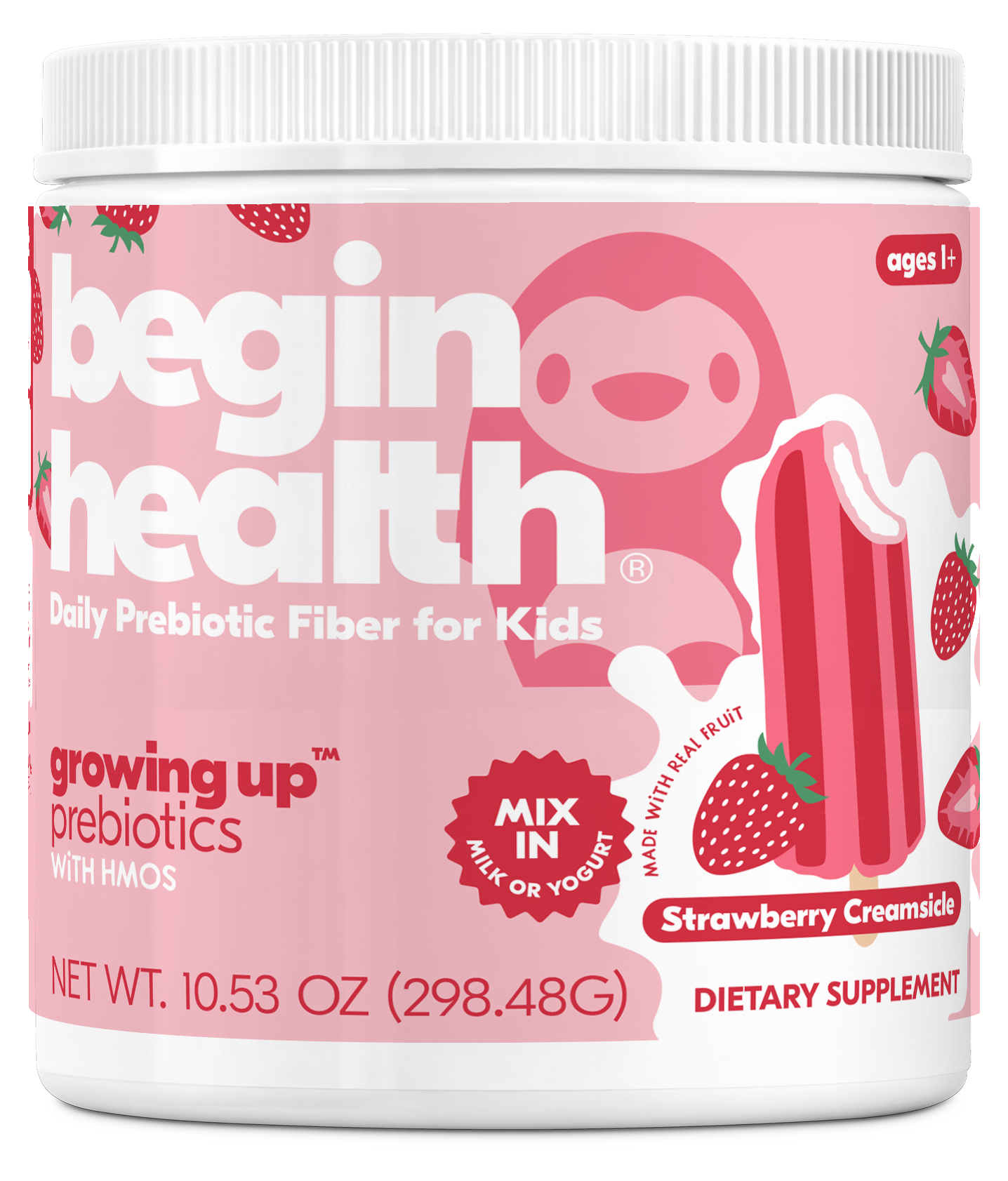
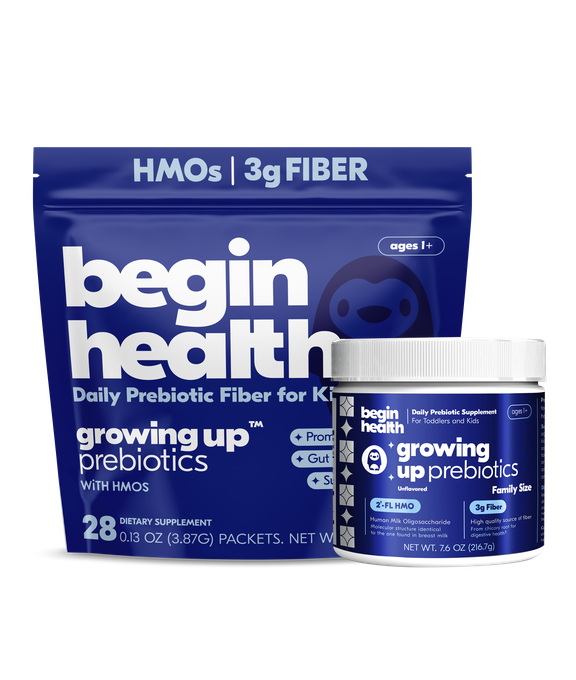
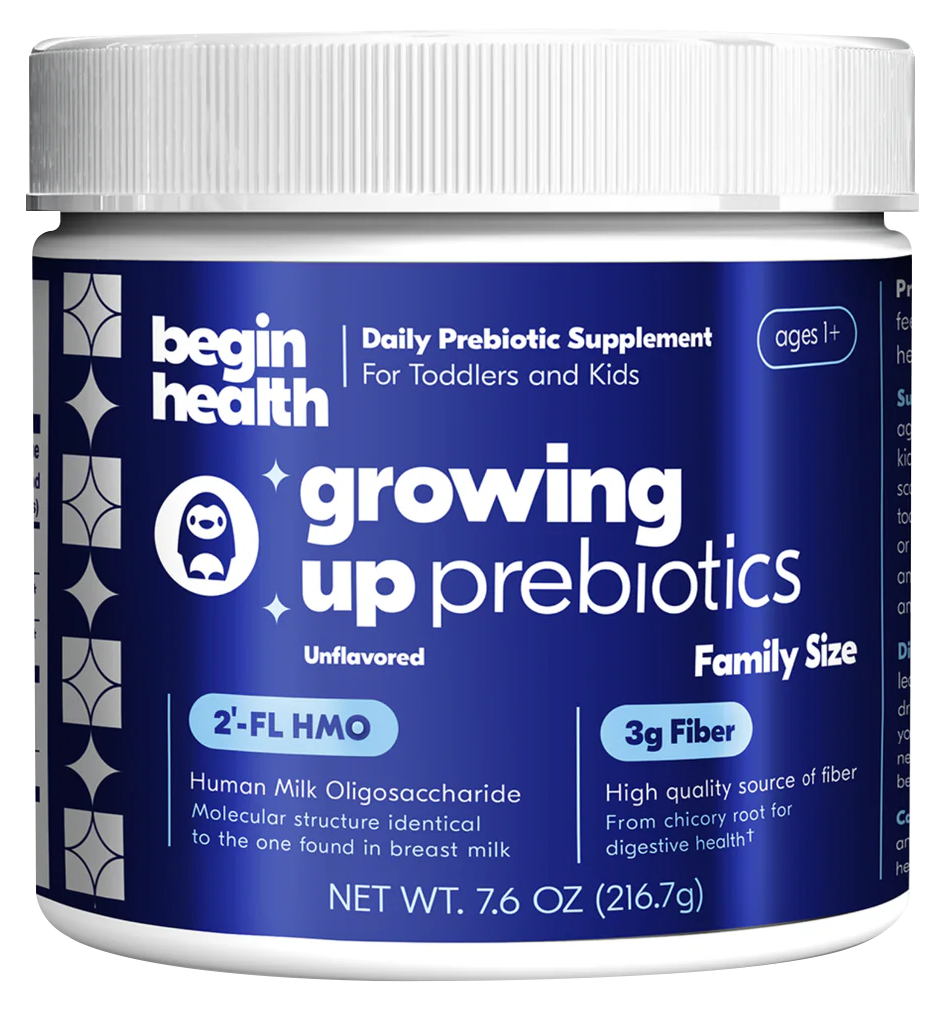
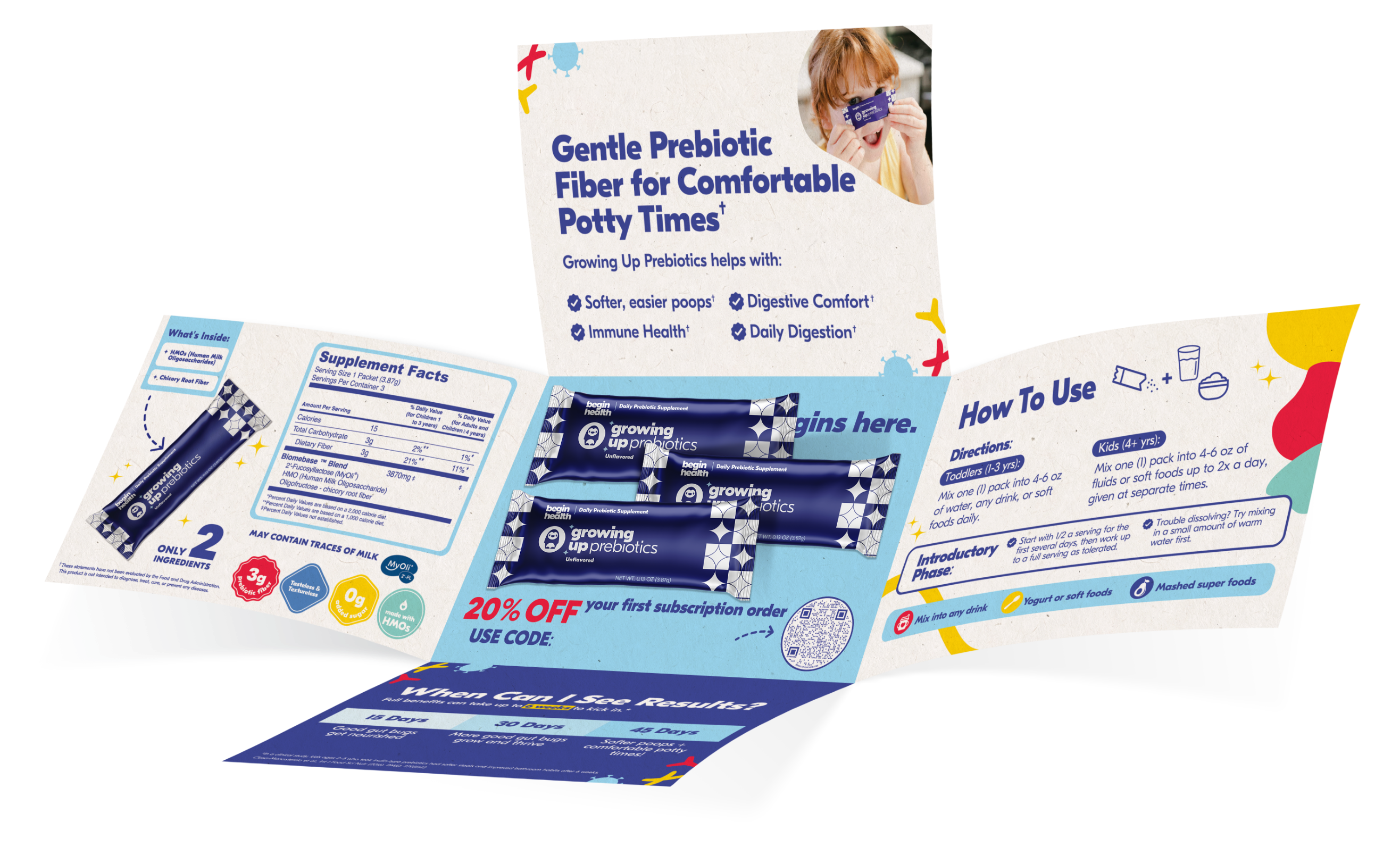
Begin Health's Growing Up Prebiotics is formulated specifically for babies and toddlers — two simple ingredients, chicory root fiber and 2'FL HMO (a human milk oligosaccharide that mirrors what's naturally found in breast milk), flavorless and mixable into any drink. It won't replace a laxative regimen, but as a daily gut health habit during maintenance, it's worth a conversation with your pediatrician.
When Should I Call the Doctor?
If you suspect overflow constipation, don't wait — this one really does need medical guidance, not just dietary changes at home.
Unlike run-of-the-mill constipation that often responds to more fiber and water, overflow constipation typically involves an actual blockage that needs to be cleared before anything else will work. Your pediatrician needs to be in the loop. Reach out right away if:
- Your little one hasn't had a meaningful bowel movement in five or more days
- They're in noticeable pain or their belly is hard and distended
- There's blood in or around the stool
- The accidents are happening multiple times a day
- Your kiddo seems emotionally affected — withdrawn, anxious, hiding soiled clothes
- You've been managing constipation at home for weeks and things aren't improving
The sooner you get a plan in place, the shorter the road to recovery.
The Takeaway
Overflow constipation looks like diarrhea. It acts like a behavior problem. It's neither. It's a backed-up colon that got to the point where liquid stool is leaking around a blockage your little one can't feel or control. The good news is that it's treatable — fully treatable — with the right approach and enough patience. Pull the shame out of it, call your pediatrician, and know that most kiddos who get through the treatment plan come out the other side completely back to normal.
Frequently Asked Questions
How do I know if it's overflow constipation or just diarrhea?
Look at the bigger picture. Diarrhea usually comes with urgency, cramps, and often resolves within a few days. Overflow constipation typically happens in a kiddo who has a history of hard or infrequent stools, seems backed up, and has a belly that looks or feels full. The accidents may look loose, but there's usually little to no solid stool coming out at all — that's the clue that something is blocked rather than moving too fast.
At what age does overflow constipation usually show up?
Most often in toddlers and preschoolers between ages 2 and 5, which is also peak time for potty training and functional constipation. It can appear in school-age kiddos too — often triggered by reluctance to use school bathrooms or increased stress — but the toddler years are the most common window.
How long does recovery take?
Longer than most parents expect, honestly. Clearing the blockage may take a few days, but getting the rectum back to normal size and sensitivity and establishing reliable bowel habits typically takes several months of consistent maintenance therapy — sometimes a year or more. Pulling back too soon is the most common reason it comes back.
Will my kiddo need laxatives for a long time?
Often yes, at least through the maintenance phase — and that's okay. Polyethylene glycol has a strong safety record for extended use in little ones. The goal is to eventually wean off as normal habits are established, but that weaning should happen slowly and with your pediatrician's guidance.
Related Articles


-
Buy Now

Join the
Happy Gut Club
Daily reads to help your little ones lead happier and healthier lives.