


 Login / Create Account






The 3 F’s Rule for Toddler Constipation Explained
share this article
If your toddler is struggling to poop, it can be uncomfortable to watch—and stressful to manage. Constipation can affect mood, appetite, sleep, and even potty training, which leaves many parents wondering what to focus on first. The good news is that constipation support often comes down to a few simple, steady habits rather than drastic changes.
Many pediatricians and dietitians use an easy framework called the 3 F’s: fiber, fluids, and fitness. Together, these support digestion in a way that works with your kiddo’s body, not against it.
How does fiber help with toddler constipation?
Fiber helps stools stay soft and easier to pass.
Fiber adds bulk and helps hold water in the stool, which supports more regular bowel movements. When toddlers aren’t getting enough fiber, often due to picky eating or food transitions, stools can become harder and more difficult to pass.
Fiber-rich foods like pears, apples, carrots, berries, oats, and whole grains are common starting points. Consistency matters more than perfection. Small daily servings tend to work better than occasional big pushes.
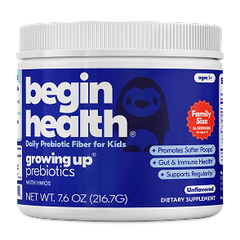
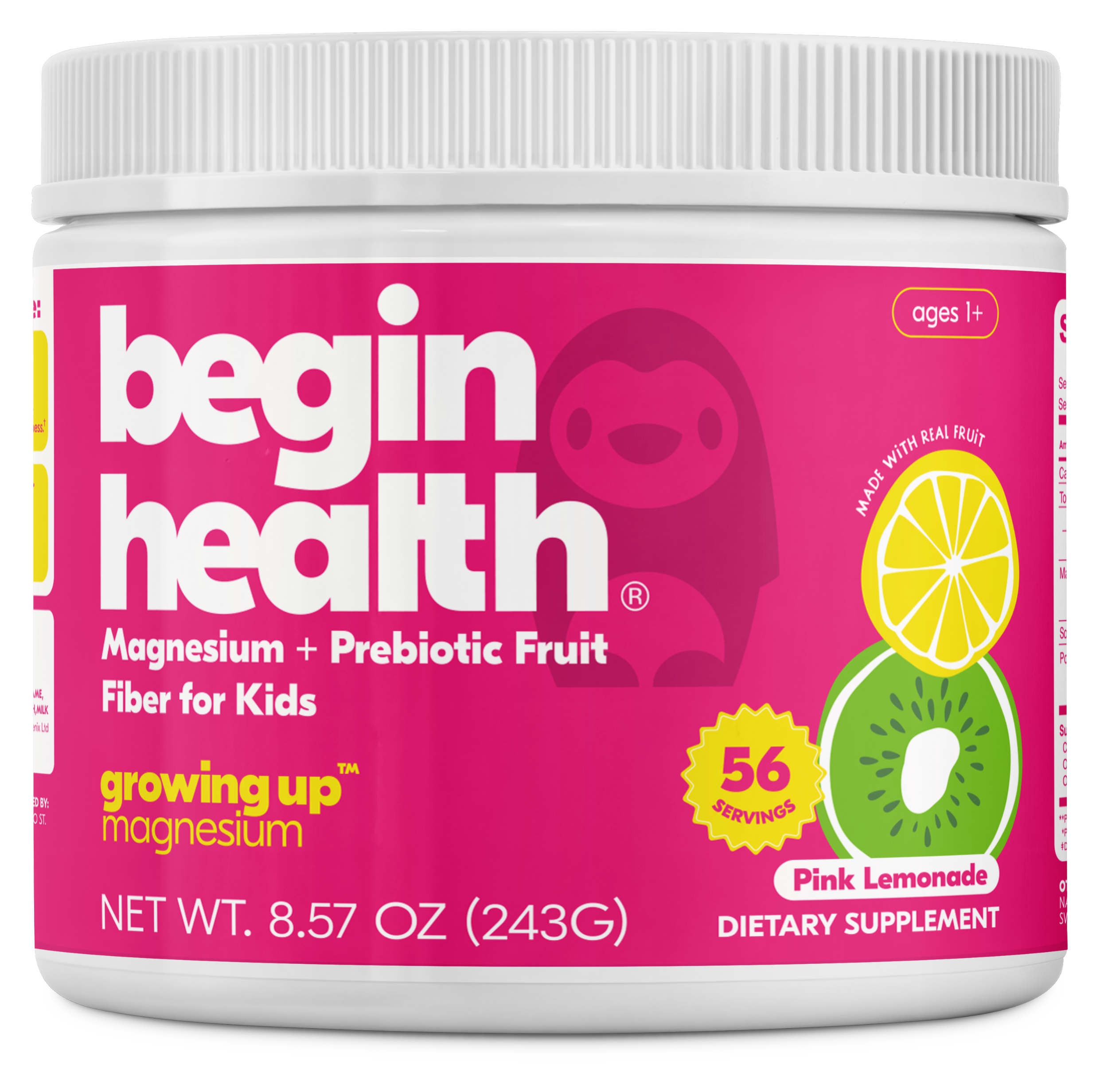
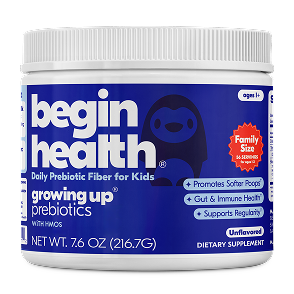
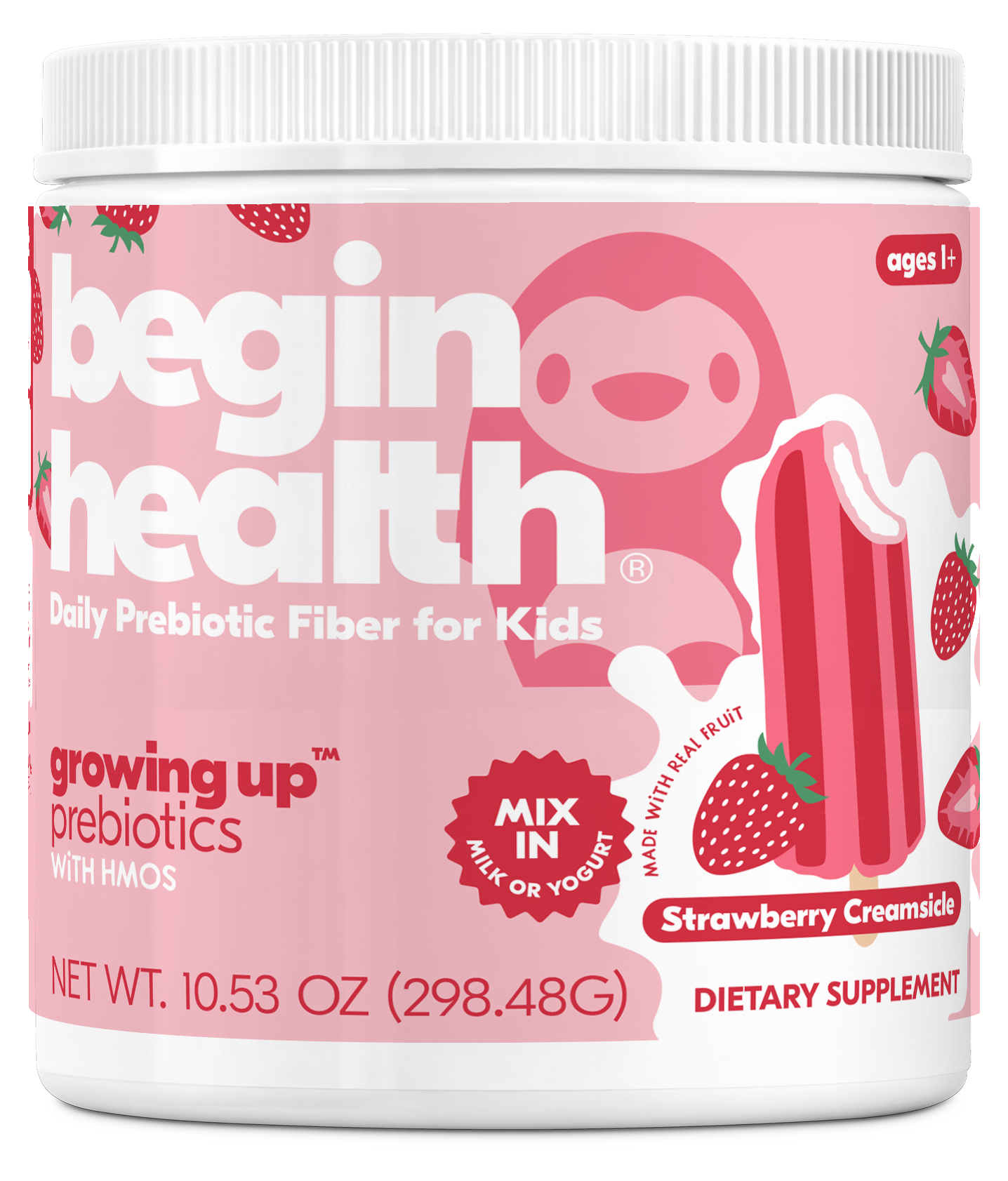
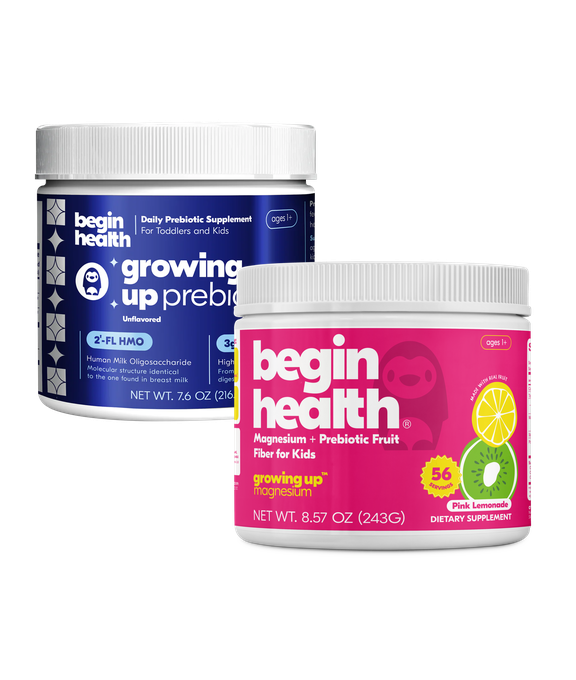
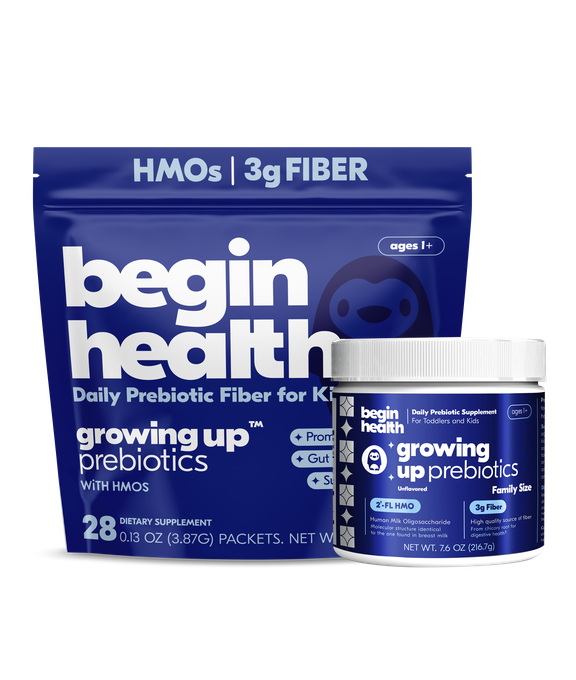
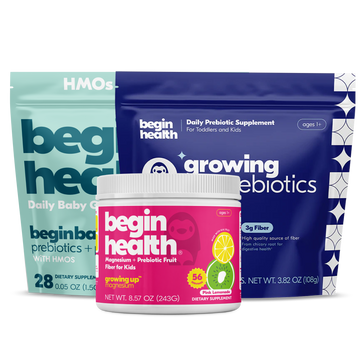
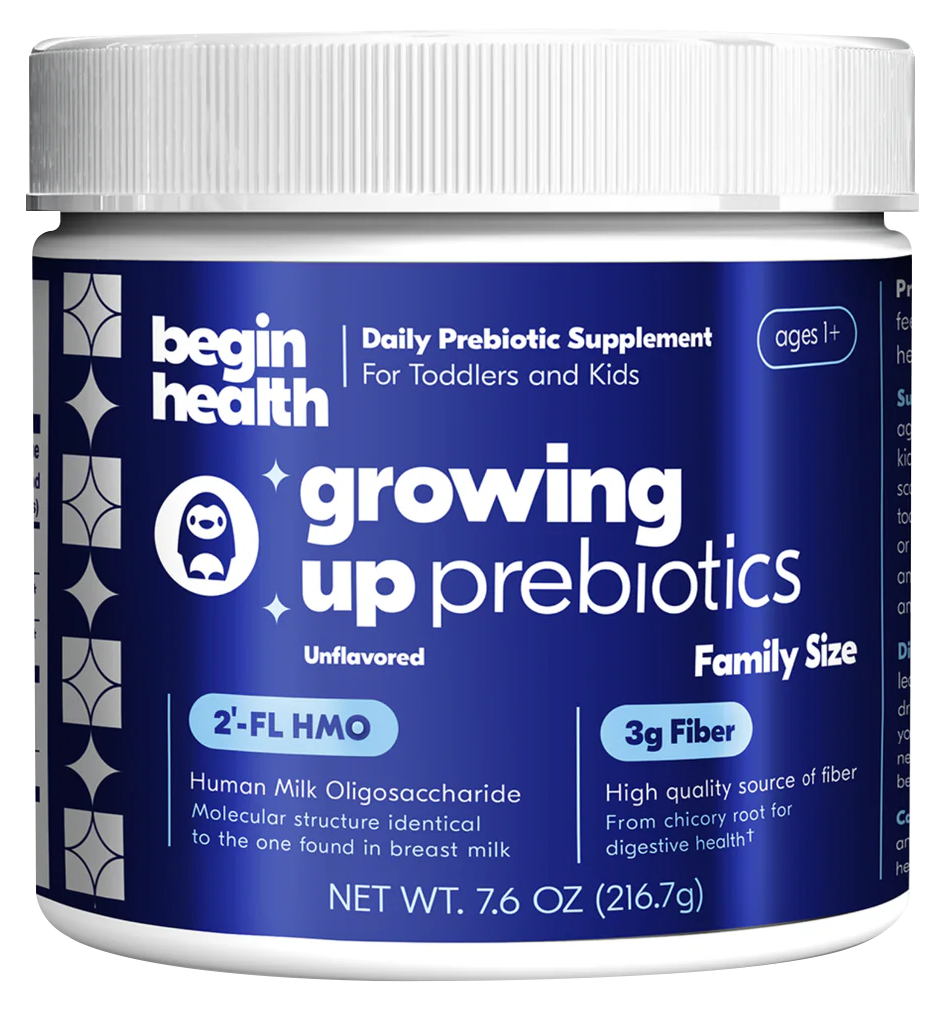
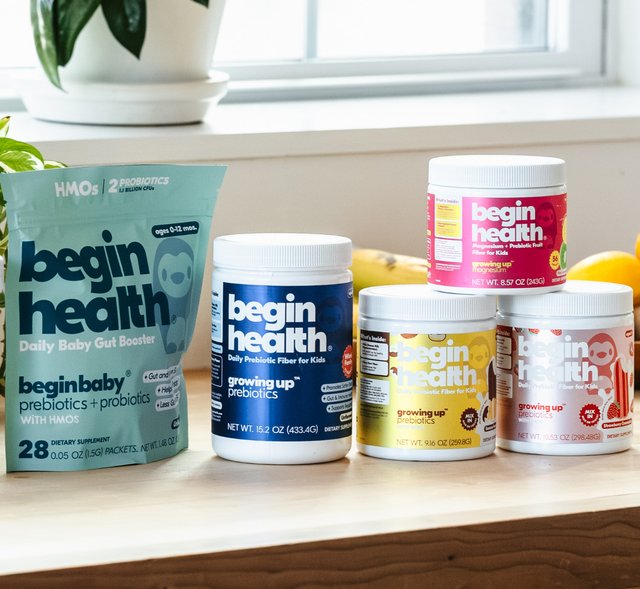
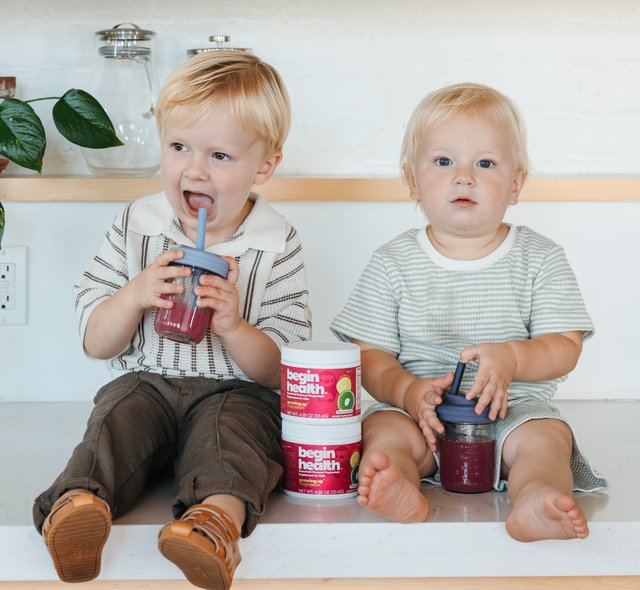
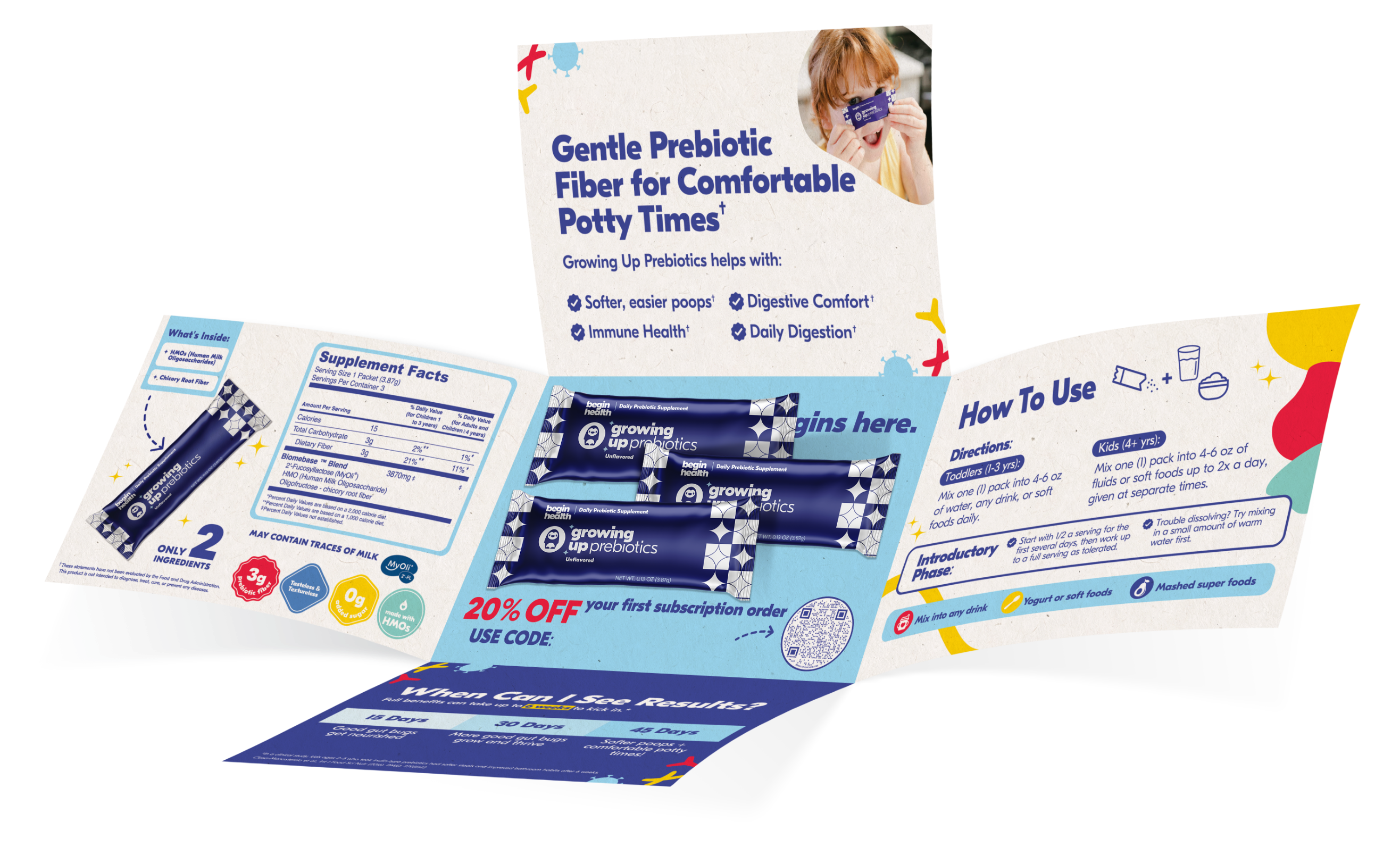
For families who struggle to get enough fiber into meals, especially during picky phases, some choose gentle prebiotic fibers. Prebiotics are a type of fiber that feed beneficial gut bacteria and can support softer, more regular poops over time. Begin Health’s toddler-safe prebiotic products are designed to mix easily into drinks or food without changing taste or texture, which can make daily routines easier.
How much fiber does my toddler need?
Toddlers need a steady, age-appropriate amount of fiber spread throughout the day.
Rather than focusing on exact numbers, most parents do best by offering fiber consistently across meals and snacks. That approach helps the gut adjust gradually and reduces the chance of gas or discomfort.
If your toddler is newly increasing fiber, pairing it with enough fluids becomes especially important.
Why are fluids important for constipation?
Fluids help fiber do its job by keeping stools soft and moving.
Without enough hydration, even fiber-rich diets can lead to firm stools. Water helps move stool through the digestive tract and supports overall gut comfort.
Many toddlers get distracted and simply forget to drink enough during the day. Offering water regularly, especially with meals and active play, can make a noticeable difference.
For toddlers who resist plain water, soups, smoothies, watery fruits, and diluted beverages can all contribute to daily fluid intake.
Can activity and stress affect toddler constipation?
Movement and emotional comfort both support healthy digestion.
Physical activity encourages natural bowel movement by stimulating the digestive system. Active play, like running, climbing, dancing, or playground time, often helps stools move along more comfortably.
Stress also plays a role. Potty training pressure, fear after a painful poop, or changes in routine can lead to withholding. When a toddler starts holding stool, constipation often becomes harder to resolve. A calm, low-pressure environment around the potty and daily routines can support regularity just as much as diet does.
The takeaway
Toddler constipation is usually supported best through simple, consistent habits. The 3 F’s, fiber, fluids, and fitness, work together to support softer stools and more regular poops. Gentle changes, patience, and daily routines go a long way toward helping your kiddo feel comfortable again.
FAQs parents often ask
How long does it take for fiber to help constipation?
Many toddlers see improvement within a few days, though consistency matters.
Can too much fiber cause problems?
Introducing fiber too quickly can cause gas or discomfort, so it’s best to increase slowly.
Does my toddler need supplements for constipation?
Some families use toddler-safe prebiotics when food alone isn’t enough, especially with picky eaters.
Can potty training make constipation worse?
Yes. Stress or fear around the potty often leads to stool withholding.
When should I call the pediatrician?
If constipation is persistent, painful, or paired with blood, vomiting, or severe discomfort.
Related Articles

Author
Begin Nutrition Team


-
Buy Now

Join the
Happy Gut Club
Daily reads to help your little ones lead happier and healthier lives.